
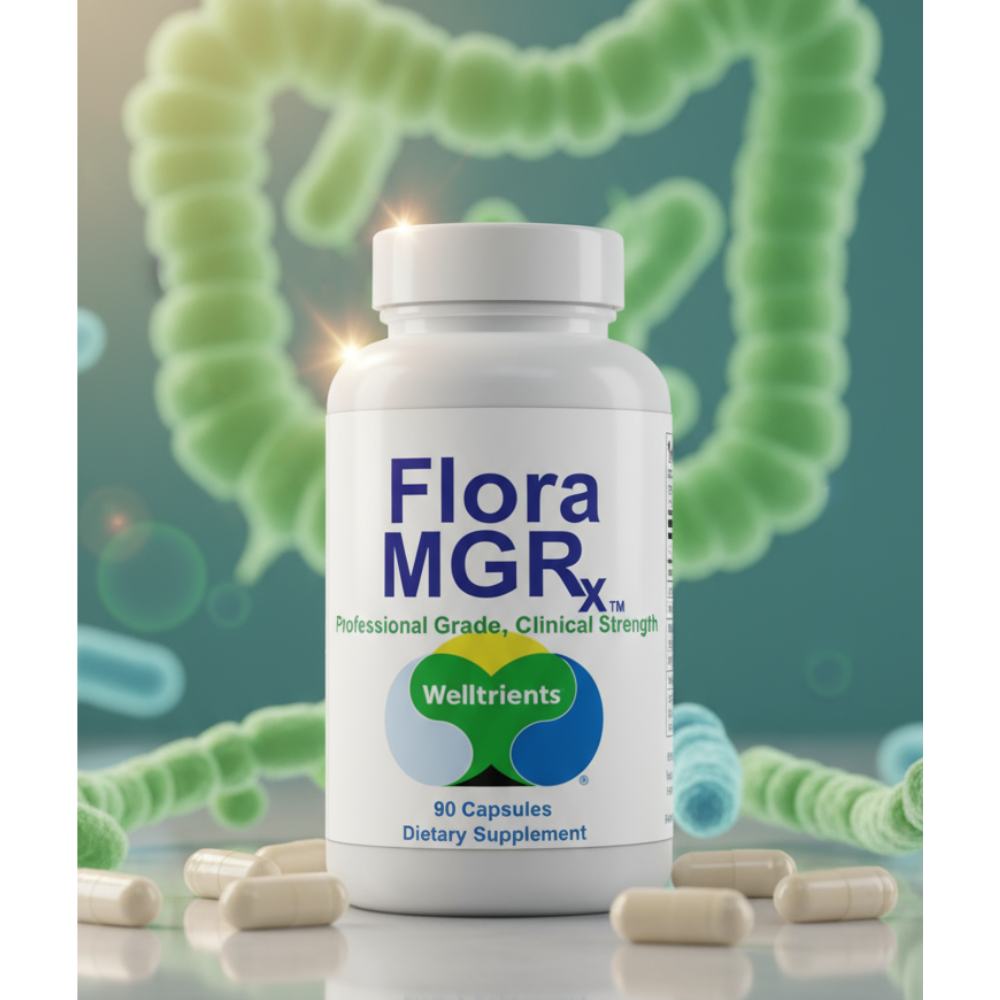
Flora MGR™ Probiotics

An Advanced Synergistic Probiotics Complex Digestive and Gastrointestinal Support. Flora MGR™ is a proprietary formula of Probiotics blended to support healthy digestive function which is imperative for ideal absorption and utilization of nutrients. Flora MGR provides a complete panel of 15 different strains of important, gut-beneficial organisms (probiotic bacteria) necessary for the promotion of gut (colon) health and immune functions.

90 Capsules per Bottle

flora supplements, intestinal flora, beneficial bacteria

Special Price: $29.95

 
Share |

You May Also Like:

Colloids for Life Mesosilver Colloidal Silver

Mesosilver® 250mL(8.45 oz) 4 Pack

Quantity
Price
1 – 2$87.88
3 +$85.96

 
Colloids for Life Mesosilver Colloidal Silver

Mesosilver® 250mL(8.45 oz) 10 Pack

Price: $214.90

 
colloidal silver

Mesosilver® 250mL (8.45 oz)

Quantity
Price
1 – 3$24.97
4 – 9$21.97
10 +$21.49

 
Mesosilver colloidal silver gallon

Mesosilver® 1 gallon (3.785 Liters)

Price: $217.00

 
natural antioxidant supplement, antioxidant best, nutrition antioxidants

Triple Strength Anti-Oxidant™

Price: $38.95

 
welltrient_one_vita_one.jpg

Welltrient One™Vita One

Price: $35.97

 
Natural Calcium supplement

Cal Mag Complete™ 150 Capsules

Price: $23.95

 
colon_clnz.jpg

Colon CLNz™

Price: $21.95

 
probiotic digestive

Digest Aid+™

Price: $27.95

 
Flora MGR™ is recommended to populate the intestinal tract with a variety of beneficial microorganisms that may be removed in colon cleansing or after times of intestinal stress.

Probiotics are live microorganisms that exert many beneficial health effects. Probiotics help to re-establish a healthy balance of beneficial bacteria flora in the intestine. Probiotics provide essential functions in the body whose microorganism populations can be changed by microbial interactions, stress, host secretions and immune responses. Our diet influences our internal bacterial colonization. Too much fat, protein or sugar encourages the growth of the wrong types of bacteria. Alcohol, drugs and chlorine (from tap water) are usually fatal to healthy intestinal bacteria. A great diet strategy seeks to replenish friendly bacterial cultures in our lower tract.

As an Adult dietary supplement take 3 to 9 Capsules per day (1-3 Capsules with a meal), or as directed by your Health Care Practitioner.

Advance Use: Take up to Triple the amount with or without food per day or as recommended by your Healthcare Professional.

Supplement Facts

Ingredients in 1 Capsule of Flora MGR Probiotics:
Lactobacillus acidophilus 3,000,000,000 CFU  *   
Bifidobacterium bifidum 1,500,000,000 CFU  *   
Lactobacillus brevis 250,000,000 CFU  *   
Lactobacillus bulgaricus 300,000,000 CFU  *   
Lactobacillus casei 100,000,000 CFU  *   
Lactobacillus helveticus 100,000,000 CFU  *   
Lactobacillus lactis 100,000,000 CFU  *   
Lactobacillus plantarum 400,000,000 CFU  *   
Lactobacillus rhamnosus 250,000,000 CFU  *   
Lactobacillus salivarius 100,000,000 CFU  *   
Bifidobacterium breve 1,500,000,000 CFU  *   
Bifidobacterium infantis 2,000,000,000 CFU  *   
Bifidobacterium longum 1,500,000,000 CFU  *   
Streptococcus faicuim 250,000,000 CFU  *   
Streptococcus thermophilus 250,000,000 CFU  *   
  *Daily Value not established

The Role of Flora in Our Digestive Tract

Trillions of friendly probiotic microorganisms called “Flora” inhabit our body and help us fight off infections and disease. The flora in the digestive system make it possible to digest food and absorb nutrients. In the gastrointestinal tract the Flora manufactures essential vitamins and prevents the colonization of undesirable microbes. Our body provides a protected pH balanced place for the Flora to reside, free from predators and through our diet, feed the Flora with rich nutrients.

In our mother's womb our stomach and gastrointestinal tract is usually void of flora. At birth we travel through our mother’s womb and become exposed to our first friendly flora. Most of the intestinal flora in breast-fed babies consists of the anaerobic bifidobacteria. After a baby's first intake of live food, the colonization of flora accelerates and the intestinal flora changes to include the more aerobic tolerating lactobacilli.

Over time we accumulate many types of microorganisms, but the dominant bacteria bifido and lactobacilli become our resident probiotic Flora. It is this flora that we depend on to regulate our transit time and stool formation for the rest of our lives.

Our bodies contain both friendly (Flora) and unfriendly (the bad guys) bacteria. The resident Flora should be the dominant microbe present in the digestive system. Our diet influences the composition and dominance of our internal bacterial colonization. Too much fat, protein, or sugar encourages the growth of the wrong types of bacteria. Other factors that influence the flora make up of the stomach and gastrointestinal tract include; age, body pH, cultural conditions, and the use of antibiotics. Antibiotics from our foods and medicines greatly change the composition of the gastrointestinal flora. Alcohol, drugs, and chlorine (from tap water) are usually fatal to healthy intestinal bacteria.

The mouth and esophagus are part of the digestive system; the bacteria present are usually those that have been swallowed with the food. These bacteria do not normally survive the journey through the highly acidic stomach. One acid surviving bad bacterium in the stomach is Helicobacter pylori. This bacterium is known to be a cause of stomach ulcers with links to the development of stomach and intestinal cancers.

Some of our flora take up long-term residence and do many important things for the body. Some of our friendly flora we ingest live only a few days in our system and do short-term, important work.

Our internal microorganisms are continuously changing, each strain fighting for survival and dominance. Our health is dependent on the friendly flora winning the battle. The life cycle of our resident Flora is believed to be 4-6 hours, which means every day we have that many opportunities to reestablish our dominate probiotic.

The life cycle of the fast growing transit bacteria is considerably shorter. Probiotic transit bacteria do not easily cling to the resident receptor site for long term residence. Transit bacteria is the ideal flora because it can fight the bad bacteria for position, giving the slower growing resident Flora a chance to reestablishes its dominance.

Most of the flora in the digestive system coats the walls of the small intestine. The pH of the intestine varies along its length where the lactobacilli is dominant. The lower regions of the small intestine contain more bacteria with a greater variety then the preceding parts.

The anaerobic (do not grow in the presence of oxygen) flora in the large intestine is more dense, but fewer in count. The massive quantity of Bifidobacterium bifidum along with our colons water recycling function, determines the quality, size, color and smell of our stools leaving the anus.

The quantity, variety, and strength of microbial flora in the gastrointestinal tract is very important to our health. Bottom line, the gut feeling among experts is that consumption of probiotics has health benefits for us all.

Ingredient Summary:

Lactobacillus acidophilus The probiotics supplement “Lactobacillus” genus of Gram-positive facultative anaerobic, manganese-dependent, resident organisms that are generally catalase-negative, nonmotile, utilize glucose fermentation found present in the vagina and the gastrointestinal tract in the body. Lactobacillus acidophilus in the genus Lactobacillus is a resident probiotic that produces enzymes to digest protein, fat and lactase (ferments lactose into lactic acid). Acidophilus assists in the production of niacin, folic acid, and pyridoxine during digestion and assist in bile deconjugation (separating amino acids from bile acids).

Bifidobacterium bifidum The “Bifidobacterium bifidum” is a specific inhabitant of an adults large intestine (colon) and composes a large presence of the beneficial microflora which produce acids to retard colonization of putrefactive bacteria. The probiotic “Bifidobacteria” species are the resident organisms that produce acids that retard the colonization of certain foreign or harmful bacteria in the colon. The “Bifidobacterium bifidum” assists normal digestion by helping the absorption of calcium, iron, magnesium and other vitamins and minerals. “Bifidobacterium bifidum” can also manufacture B vitamins and produce lactic and acetic acids.

Lactobacillus brevis The “Bifidobacteria breve” decreases intestinal permeability while improving the intestinal microflora. The probiotic “Lactobacillus” genus of Gram-positive facultative anaerobic, manganese-dependent, resident organisms that are generally catalase-negative, nonmotile, utilize glucose fermentation found present in the vagina and the gastrointestinal tract in the body.

Lactobacillus bulgaricus The transient strain “Lactobacillus bulgaricus” produces the protein interferon that inhibits the replication of invading viruses. The probiotic “Lactobacillus” genus of Gram-positive facultative anaerobic, manganese-dependent, resident organisms that are generally catalase-negative, nonmotile, utilize glucose fermentation found present in the vagina and the gastrointestinal tract in the body.

Lactobacillus casei The “Lactobacillus casei” is naturally occurring in the mouth and digestive tract breaks down carbohydrates and inhibits the growth of pathogenic bacteria in the small intestine. The probiotic “Lactobacillus” genus of Gram-positive facultative anaerobic, manganese-dependent, resident organisms that are generally catalase-negative, nonmotile, utilize glucose fermentation found present in the vagina and the gastrointestinal tract in the body.

Lactobacillus helveticus The probiotic “Lactobacillus” genus of Gram-positive facultative anaerobic, manganese-dependent, resident organisms that are generally catalase-negative, nonmotile, utilize glucose fermentation found present in the vagina and the gastrointestinal tract in the body.

Lactococcus lactis The probiotic “Lactobacillus” genus of Gram-positive facultative anaerobic, manganese-dependent, resident organisms that are generally catalase-negative, nonmotile, utilize glucose fermentation found present in the vagina and the gastrointestinal tract in the body. The transient strain “Lactococcus lactis” produces the immuno-supportive lactic acid. Lc. lactis produces the peptide “nisin”, which has activity against “bad” bacteria Clostridium difficile.

Lactobacillus plantarum Lactobacillus plantarum is a member of the genus Lactobacillus produces both the D and L isomers of lactic acid and can liquefy gelatin. Lactobacillus plantarum respire oxygen secretes hydrogen peroxide and accumulates manganese. The transient strain “Lactobacillus plantarum” has antimicrobial activities because it secretes the antibiotic called lactolin. The probiotic “Lactobacillus” genus of Gram-positive facultative anaerobic, manganese-dependent organisms that are generally catalase-negative, nonmotile, utilize glucose fermentation found present in the vagina and the gastrointestinal tract in the body.

Lactobacillus rhamnosus The probiotic “Lactobacillus” genus of Gram-positive facultative anaerobic, manganese-dependent, resident organisms that are generally catalase-negative, nonmotile, utilize glucose fermentation found present in the vagina and the gastrointestinal tract in the body. “Lactobacillus rhamnosus” is a transient aerobic probiotic that appears in the body from the mouth through the small intestine and produces “mucin” (a mucus coating).

Lactobacillus salivarius The transient strain “Lactobacillus salivarius” found in the mouth and small intestine has antimicrobial activities and breaks down proteins and produces B vitamins, enzymes and lactic acid. The probiotic “Lactobacillus” genus of Gram-positive facultative anaerobic, manganese-dependent organisms that are generally catalase-negative, nonmotile, utilize glucose fermentation found present in the vagina and the gastrointestinal tract in the body.

Bifidobacterium breve The probiotic “Bifidobacteria” species are the resident organisms that produce acids that retard the colonization of certain foreign or harmful bacteria in the colon. The “Bifidobacterium breve” assists normal digestion by producing lactic and acetic acids, repressing ulcer-inducing bacteria growth. The “Bifidobacterium breve” is an intestinal probiotic that can produce trans-9, trans-11 conjugated linoleic acid (CLA) from free linoleic acid. The “Bifidobacterium breve” has shown beneficial effects on both allergic and autoimmune responses and had a positive effect on the immune system.

Bifidobacterium infantis The probiotic “Bifidobacteria” species are the resident organisms that produce acids that retard the colonization of certain foreign or harmful bacteria in the colon. The “Bifidobacterium infantis” is present in the intestines of healthy infants and adults and in a womans vaginal tract. This strain of probiotic bacterium is a specific inhabitant of the large intestine where it can be found in high concentration among infants.

Bifidobacterium longum The probiotic “Bifidobacteria” species are the resident organisms that produce acids that retard the colonization of certain foreign or harmful bacteria in the colon. The “Bifidobacterium longum” breaks down bile salts, helps synthesize B vitamins, and stimulates the immune system through its effects on immunoglobulin A (IgA), produces lactic and acetic acids, and a major role in preventing the invasion of pathogenic and putrefactive bacteria in the body. The “Bifidobacterium longum” is among the first to colonize the sterile digestive tract of newborns and predominates in breast-fed infants.

Enterococcus faecium There are probiotics that belong to the genus Streptococcus (a gram-positive bacteria) in the lactic acid bacteria group. The “Streptococcus faecium” is a resident anarobic probiotic drawn to fiber and plant lignins that inhabitant the mucosa lining in large intestine (colon) where it prevents the wall attachment of harmful micro bacteria.

Streptococcus thermophilus There are probiotics that belong to the genus Streptococcus (a gram-positive bacteria) in the lactic acid bacteria group. The “Streptococcus thermophilus” appear to stimulate disease-fighting cells and reduce nitrites in the body. The transient antioxidant strain “Streptococcus thermophilus” produces large quantities of the immuno-supportive lactic acid and produces the enzyme lactase.

Also Available in Packages:

aids digestive, natural colon cleaner, natural antioxidant supplement

Digestive Trio™

Digest Aid+™, Flora MGRx™ and Colon CLNr+™ Better Digestive Health and Regularity Four major concerns of digestion are sufficient digestive enzymes, strong and plentiful probiotics, a clean colon and optimal transit time. This Digestive Trio™ Welltrient Pak provides for a Basic Optimum Daily Regime. Three Bottle set Contains 1 full size bottle of each: Digest Aid+™ Flora Complete™ Colon Clean+™

Price: $76.50